
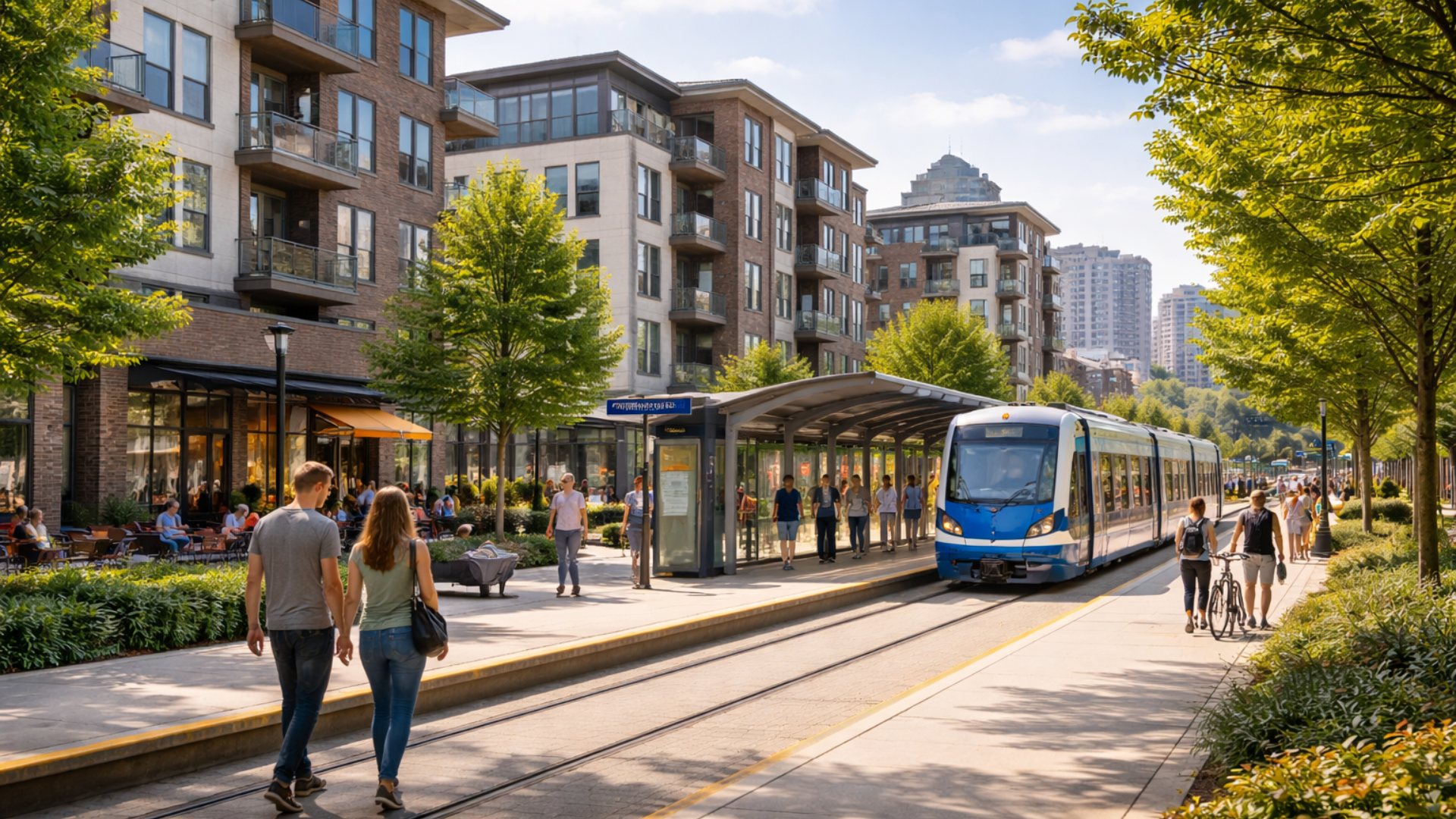
Housing affordability is often framed as a question of construction cost or unit pricing. While these factors are important, they tell only part of the story. For many households, the true cost of housing extends far beyond rent or mortgage payments—it includes transportation, access to services, and daily time costs.
This is where transit-oriented development (TOD) plays a critical role. By placing housing near reliable public transportation and essential amenities, developers can help reduce overall living costs while supporting long-term affordability.
At Millennial Group Development, we view location not as a secondary consideration, but as a foundational element of responsible housing development.
What Is Transit-Oriented Development?
Transit-oriented development refers to residential and mixed-use projects located within close proximity to public transportation, such as light rail, bus rapid transit, or commuter rail.
Effective TOD typically includes:
- Walkable access to transit stations or corridors
- Higher residential density where appropriate
- Integration with neighborhood services and employment centers
- Reduced reliance on private vehicles
While TOD is often associated with urban growth strategies, its importance in addressing housing affordability is sometimes overlooked.
Affordability Goes Beyond Rent
Housing affordability is commonly measured by how much of a household’s income is spent on rent or mortgage payments. However, transportation costs can represent a significant—and often underestimated—portion of monthly expenses.
Households located far from transit may face:
- Higher fuel and vehicle maintenance costs
- Longer commute times
- Limited access to employment opportunities
- Fewer transportation options during economic disruptions
When housing is located near transit, these costs can be reduced, effectively increasing affordability without lowering housing quality.
Location Shapes Long-Term Livability
Location influences how residents experience their homes on a daily basis. Proximity to transit can support:
- Greater access to jobs and education
- Easier access to healthcare and essential services
- Increased mobility for households without vehicles
- Improved resilience during economic or fuel price fluctuations
For families, seniors, and workforce households, these factors contribute directly to stability and quality of life.
Transit Access Supports Efficient Design
From a development perspective, transit-oriented sites often allow for more efficient land use.
When residents can rely on public transportation, developments may require:
- Fewer parking spaces
- Smaller site footprints per unit
- More efficient building layouts
These efficiencies can help control construction costs and allow resources to be allocated toward unit quality, durability, and long-term performance.
TOD and Environmental Sustainability
Transit-oriented development also supports environmental goals that align with long-term affordability.
Reduced vehicle use can lead to:
- Lower household transportation expenses
- Decreased carbon emissions
- Reduced infrastructure strain
- Improved air quality in dense neighborhoods
Sustainable development practices help ensure that housing remains viable and cost-effective over time, benefiting both residents and communities.
Community Integration Matters
Successful TOD requires more than proximity to transit—it requires thoughtful integration into existing neighborhoods.
Responsible transit-oriented housing considers:
- Neighborhood scale and character
- Pedestrian safety and accessibility
- Access to local businesses and services
- Long-term community stability
When planned carefully, TOD can strengthen neighborhoods by increasing access and opportunity without overwhelming existing infrastructure.
The Role of TOD in Affordable Housing Strategy
For developers focused on affordable housing, transit-oriented locations offer a strategic advantage.
By reducing transportation costs, supporting efficient design, and improving access to opportunity, TOD helps address affordability holistically—not just at the unit level, but across a household’s entire cost of living.
This approach aligns affordability with livability, ensuring that housing supports long-term stability rather than short-term relief.
Why Location Matters
Affordable housing challenges cannot be solved by construction alone. They require thoughtful decisions about where housing is built and how it connects residents to the broader city.
Transit-oriented development recognizes that location is a form of affordability—one that shapes daily life, financial stability, and long-term opportunity.
At Millennial Group Development, we believe that responsible housing development begins with selecting locations that support both access and affordability, creating communities that remain livable for years to come.
Looking Ahead
As cities continue to grow and evolve, transit-oriented development will remain a critical tool in addressing housing affordability. When aligned with thoughtful planning and disciplined execution, it offers a path toward housing that is not only attainable, but enduring.

Join The Discussion